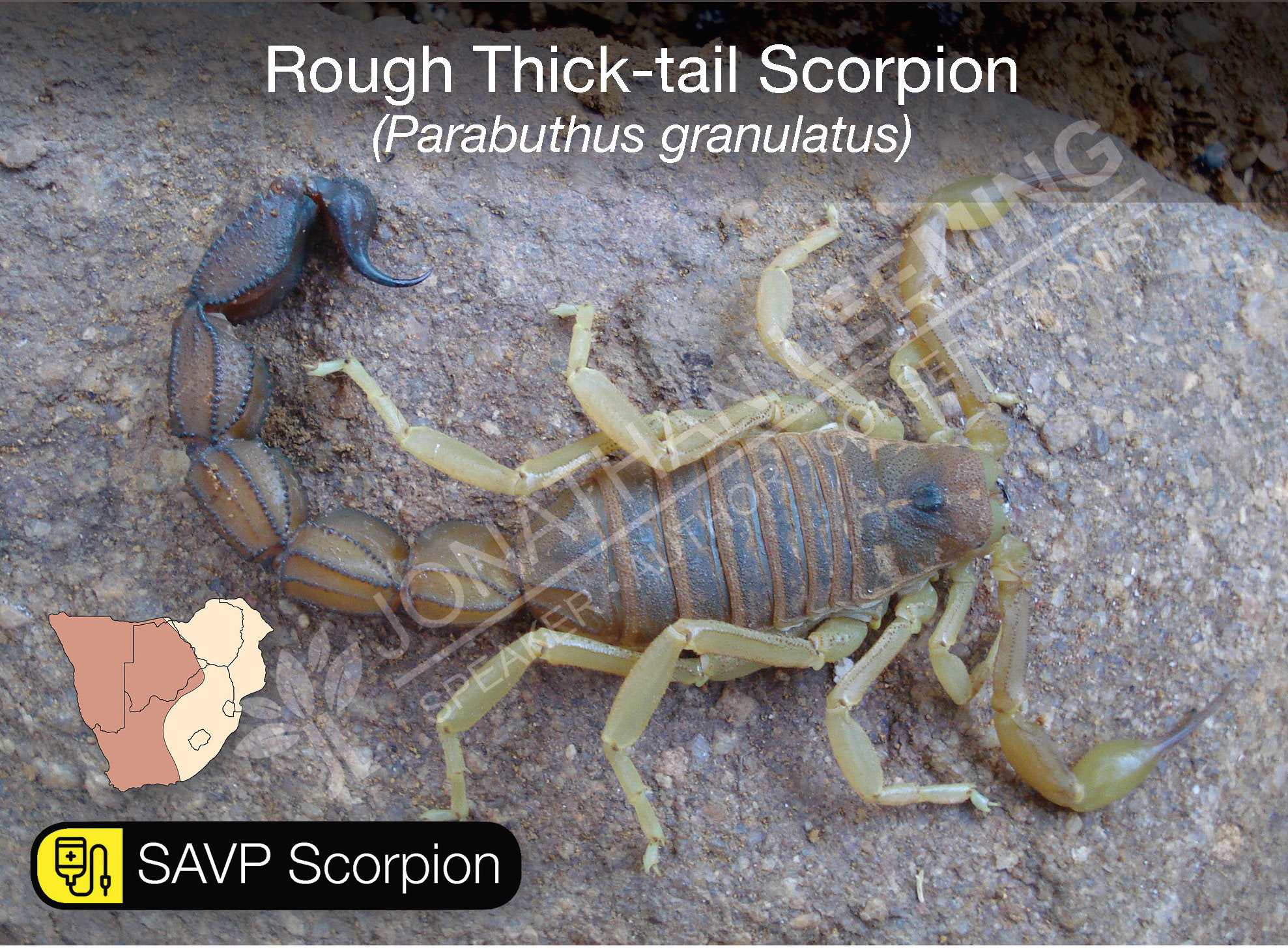
Large scorpion with an average length of 80mm to 100mm. Colouration of this scorpion is highly variable across its range. From light brown to dry brown. Sometimes with paler legs. Tail segments with strong granular keels. The feet are characterised by sand combs which allows them to walk on loose sand. Males are smaller than females with more bulbous pincers, when compared to the female. Mature males also have a keyhole on the pincers.
Widespread occurring in a variety of habitats. Inhabits disturbed areas including around human dwellings. Shelters in a self made burrow and holes in the ground, or under surface debris. Actively forages for prey, of this species is Southern africa’s most widespread species of scorpion. Abundant within the Kalahari Sand System. Often seen on roads at night.
Sting is comparatively small in size compared to other species of Parabuthus. Sting is narrower than the last tail segment. Lateral keel on tail segment 4 is obsolete.

A sting from this highly venomous species should be considered a medical emergency. Children are particularly susceptible to early onset of class 4 symptoms. Red flags apply to a sting from this species. SAVP Scorpion Antivenom is often used.

I'm on a mission to reduce the burden of spider bites and scorpion stings across Southern Africa!
Newsletter | Public Events | Books & Workbooks | Presentations | Activities |Professional Development | Shop