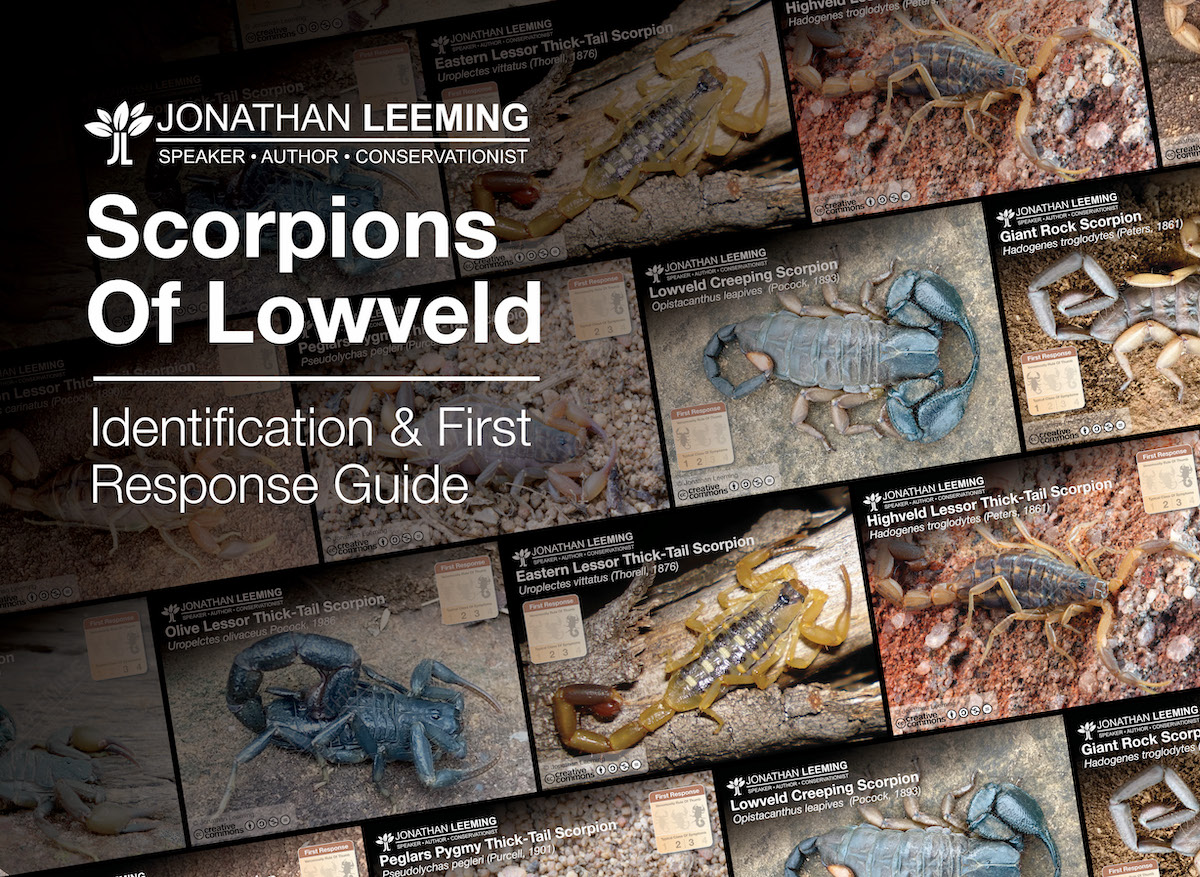
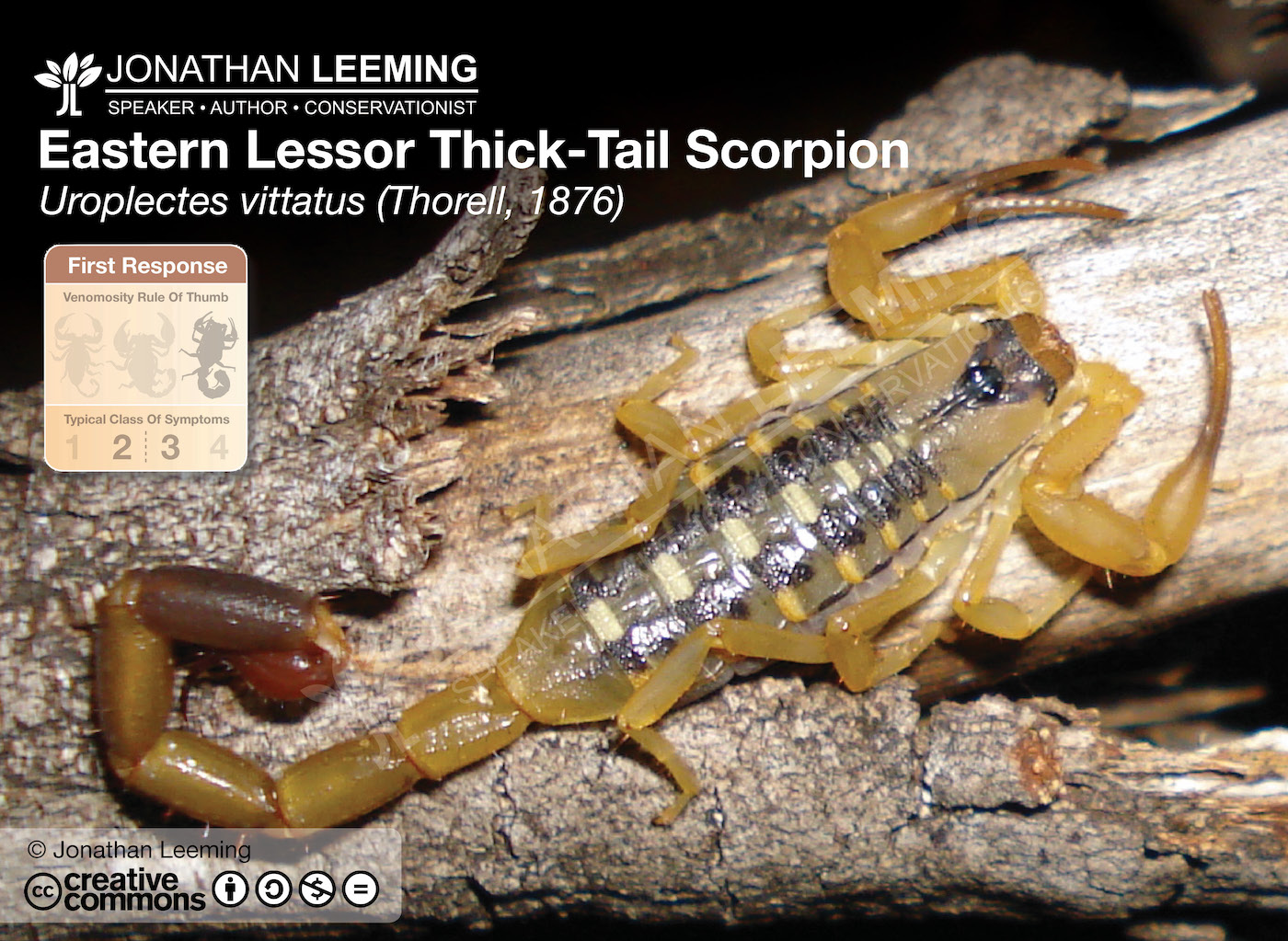
The Eastern Lessor Thick-Tail Scorpion (Uroplectes vittatus), is a small scorpion with an average length between 40mm and 50mm. Light-brown with a pale stripe down the centre of the tergites. Last 2 tail segments are darker in colour. Characteristic dark triangle on the carapace. Often seen on vegetation at night using a UV torch. A common scorpion throughout their range, this species is highly mobile in the environment. Often found in unusual places and inside the home.
Similar in appearance to
Quick to use secondary defensive behaviour, stings from this small sized, highly venomous species are common. A sting typically results in class 2 or 3 symptoms.
Note that this information is for educational purposes only. This information focuses upon the scorpion and does not take into consideration additional factors that influence symptoms severity. If you are in doubt whatsoever, then contact a helpine for medical advice.

I'm on a mission to reduce the burden of spider bites and scorpion stings across Southern Africa!
Newsletter | Public Events | Books & Workbooks | Presentations | Activities |Professional Development | Shop