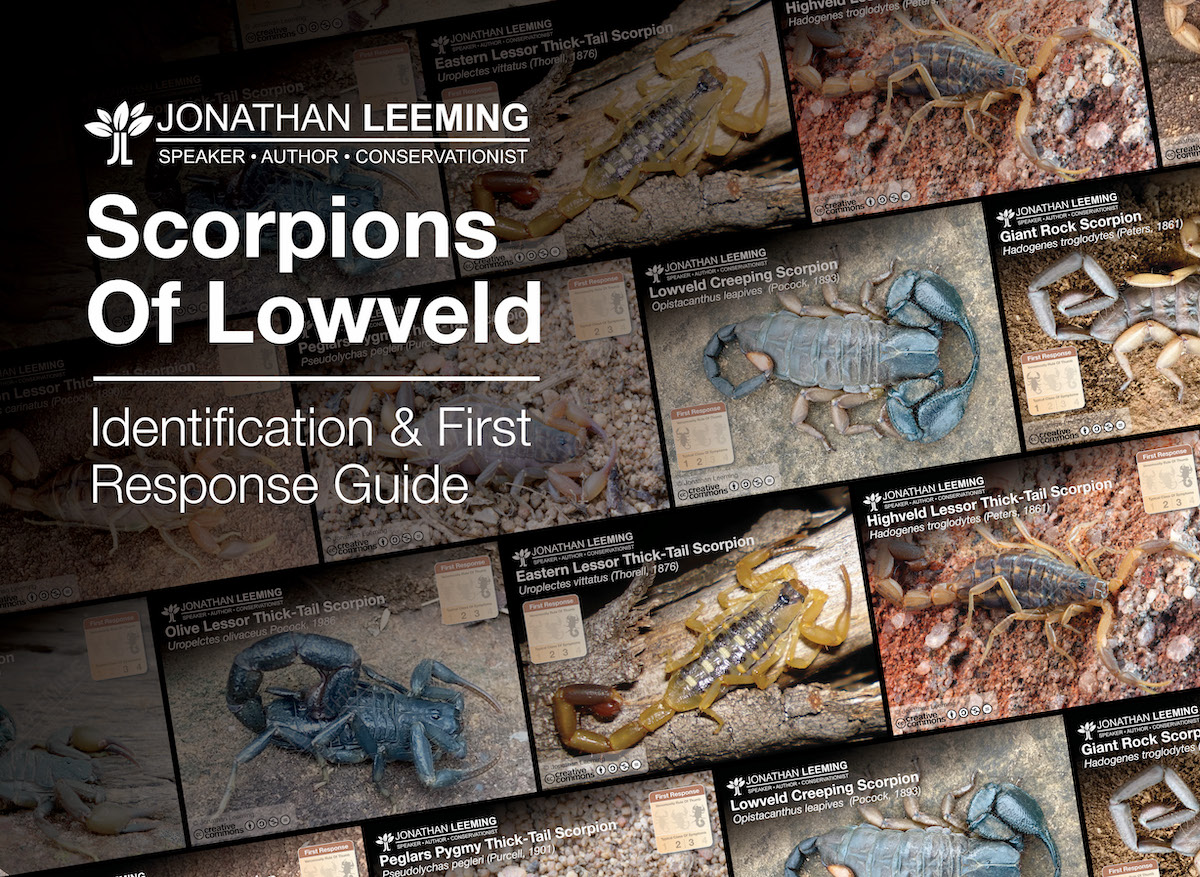
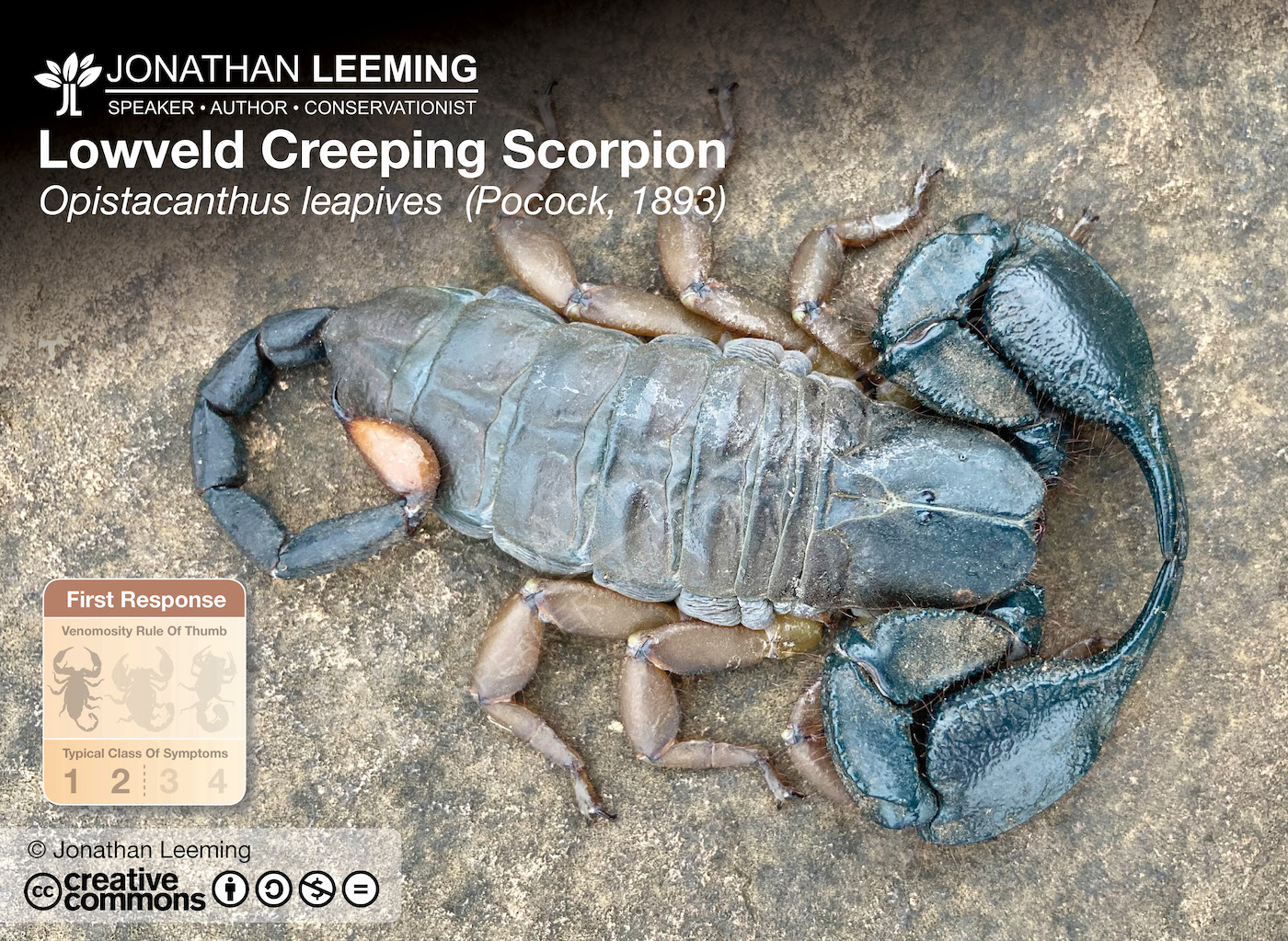
Opistacanthus leapives (Pocock, 1893)
A large scorpion with an average length of 90mm to 100mm. Legs and sting are a lighter colour than the body. Pincers are smooth in texture. Found in rocky areas where they shelter between 2 rocks or in a rock crack. The distribution of this species rarely overlaps with the Giant Rock Scorpion.
Similar in appearance to:
Relying on primary defensive behaviour, stings from this large sized, weakly venomous species are not common. This scorpion is usually reluctant to sting. A sting typically resulting in class 1 or 2 symptoms.
Note that this information is for educational purposes only. This information focuses upon the scorpion and does not take into consideration additional factors that influence symptoms severity. If you are in doubt whatsoever, then contact a helpine for medical advice.

I'm on a mission to reduce the burden of spider bites and scorpion stings across Southern Africa!
Newsletter | Public Events | Books & Workbooks | Presentations | Activities |Professional Development | Shop