
In 2026, Prendini published a monograph that contains a revision of scorpion taxa of the world. This revision includes changes at family, genus, species levels for Southern African scorpions. As with the scientific process, some of these changes will be contested by other scientists, while others will be adopted verbatim. No doubt that these changes will take time to filter through popular media.
This page focuses upon those changes that affect Southern African scorpions. Download this detailed monologue using the link below.
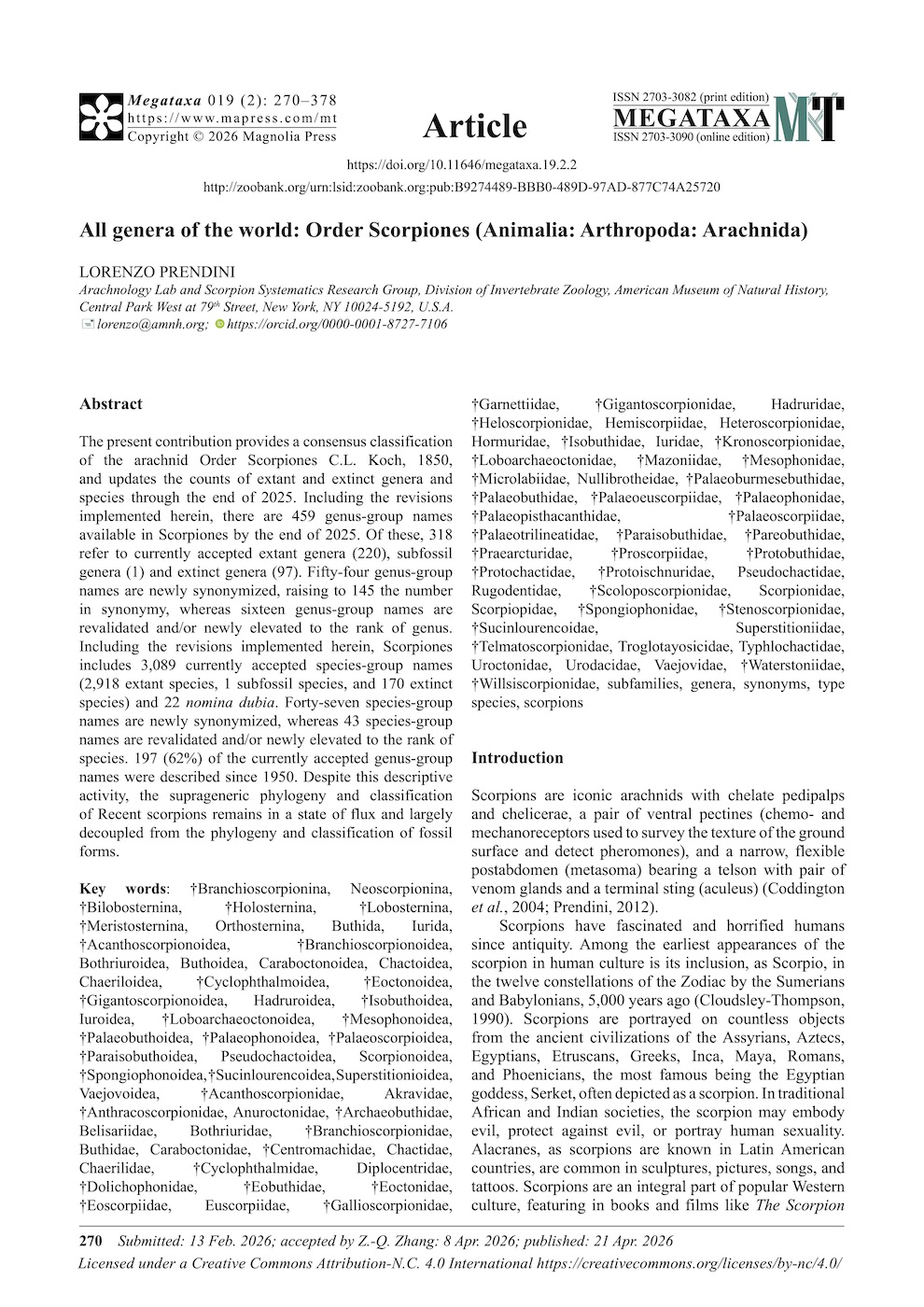
All genera of the world: Order Scorpiones (Animalia: Arthropoda: Arachnida)
LORENZO PRENDINI
Arachnology Lab and Scorpion Systematics Research Group, Division of Invertebrate Zoology, American Museum of Natural History, Central Park West at 79th Street, New York, NY 10024-5192, U.S.A.
The present contribution provides a consensus classification of the arachnid Order Scorpiones C.L. Koch, 1850, and updates the counts of extant and extinct genera and species through the end of 2025. Including the revisions implemented herein, there are 459 genus-group names available in Scorpiones by the end of 2025.
In Southern Africa the name changes involve moving all African Opistacanthus to Cheloctonus, lumping 2 species into species, elevating subspecies to full species.
Acknowledgements to Dr Ian Engelbretch for decoding the name changes and updates.
The following definitions will help you understand the changes as listed in Prendini 2026..
Support my work and purchase a copy my
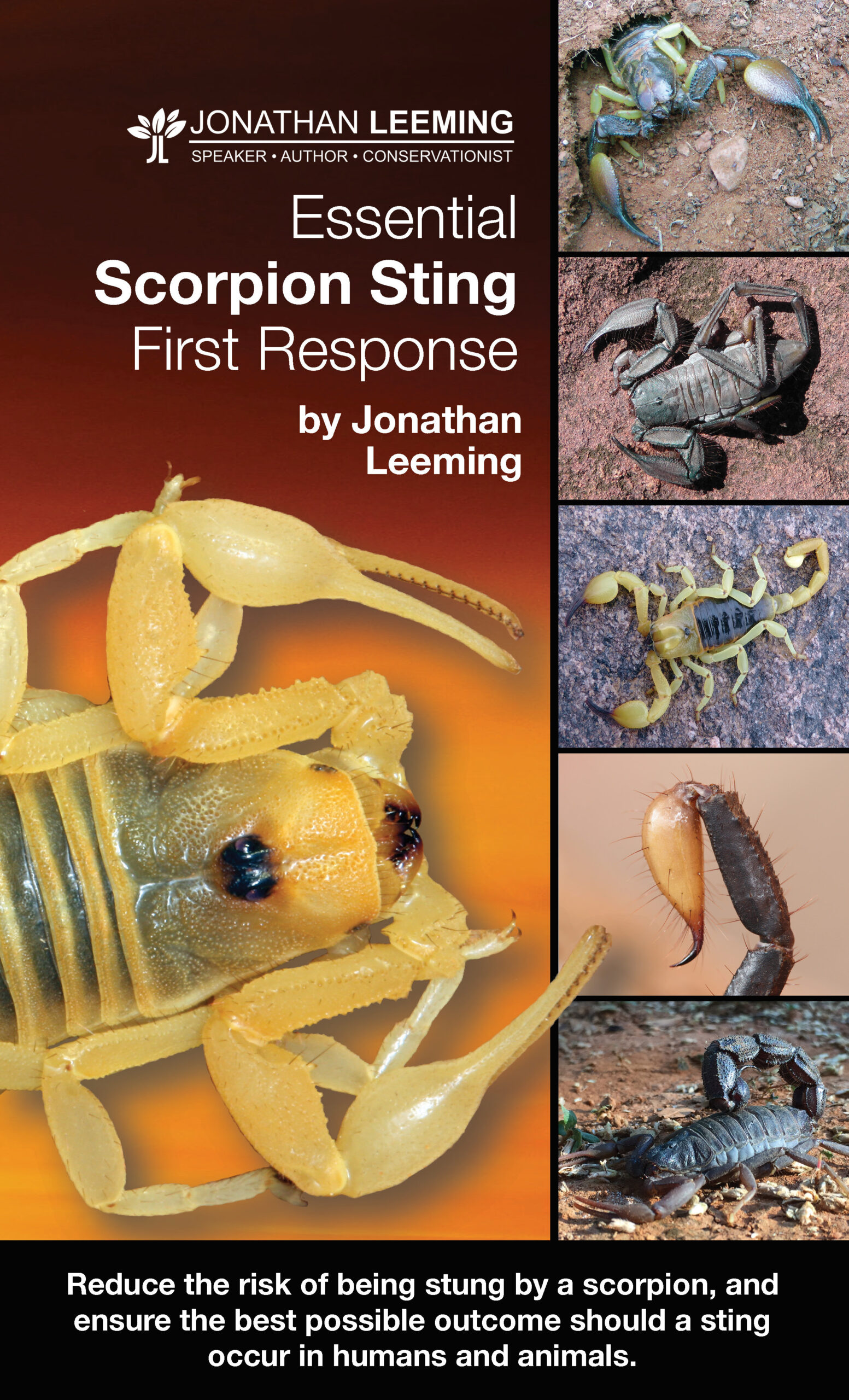
Essential Scorpion Sting First Response Book
This book represents a giant leap forward in our understanding of scorpions and scorpion stings in southern Africa. It offers a new and innovative first response framework that is based upon the latest science, is easy to understand and put into practice. This book is an upgrade on our current understanding of scorpions and scorpions stings as it offers a refreshingly new perspective on a familiar subject that is in desperate need of updating.
I'm on a mission to reduce the burden of spider bites and scorpion stings across Southern Africa!
Newsletter | Public Events | Books & Workbooks | Presentations | Activities |Professional Development | Shop